The Louisiana World Language Reading Conference Community of Practice is designed to keep educators learning, sharing, and collaborating throughout the school year.
Unlike a traditional webinar, these monthly meetings are designed for active participation. Each session begins with a short, research-informed introduction to a practical issue in second-language literacy. Participants then spend the majority of the session working with other educators to put those ideas into practice—finding resources, adapting existing materials, creating new activities, examining student needs, and sharing ideas across classrooms and schools.
Sessions are structured around a simple cycle: learn, apply, share. Participants leave each meeting not only with new knowledge, but with resources, materials, or strategies they have already begun preparing for their own classrooms.
The Community of Practice also provides a regular space for educators interested in language and literacy to connect with colleagues across Louisiana. Participants are encouraged to bring their own experiences, questions, resources, and classroom challenges to the conversation. Rather than treating professional learning as a one-time event, the series creates an ongoing community where educators can learn from research, from practitioners with complementary expertise, and from one another.
Fall 2026 sessions will address authentic resources, distinguishing language-learning challenges from potential disabilities, scaffolding literacy across proficiency levels, Integrated Performance Assessments, and formative assessment for monitoring student engagement.
Community of Practice:
Fall Literacy Series
-
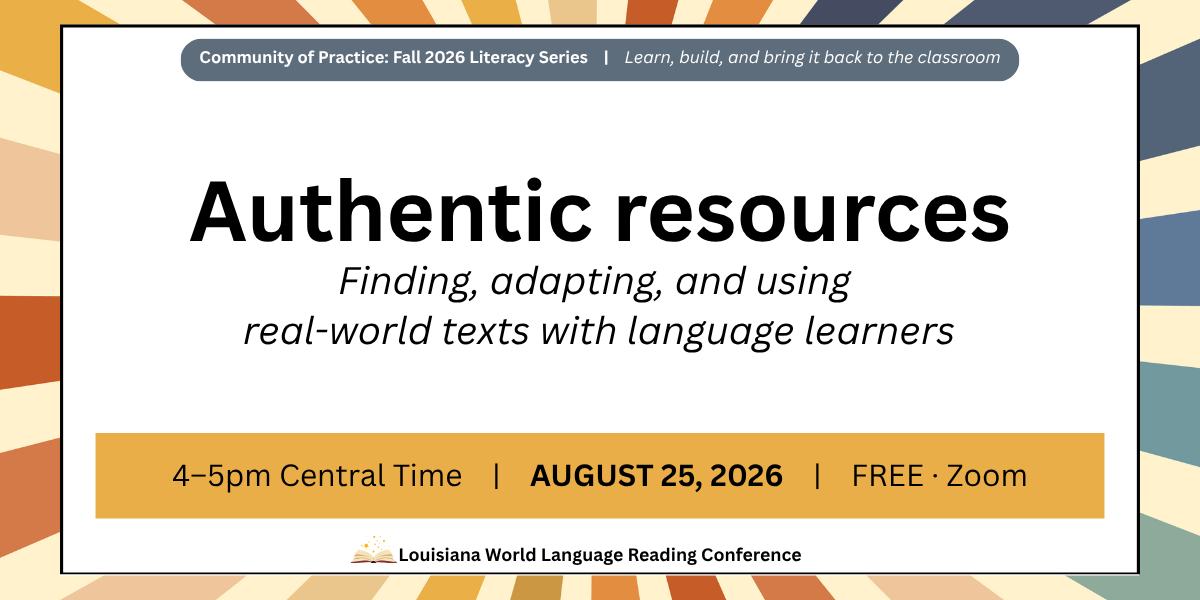
Authentic Resources
August 25, 2026 | 4-5 Central Time | Zoom
Description:
Authentic resources can bring language, culture, and real-world communication into the classroom—but finding an interesting resource is only the first step. In this session, we'll explore what makes a resource "authentic" and examine practical ways to turn authentic texts and media into accessible interpretive reading tasks. Participants will then work with colleagues to find, adapt, or develop a resource and accompanying task for their own students.Objectives: Participants will be able to…
distinguish authentic resources from pedagogically created materials
identify features that may make an authentic resource more or less accessible to novice readers
develop or adapt an interpretive task using an authentic resource.
-
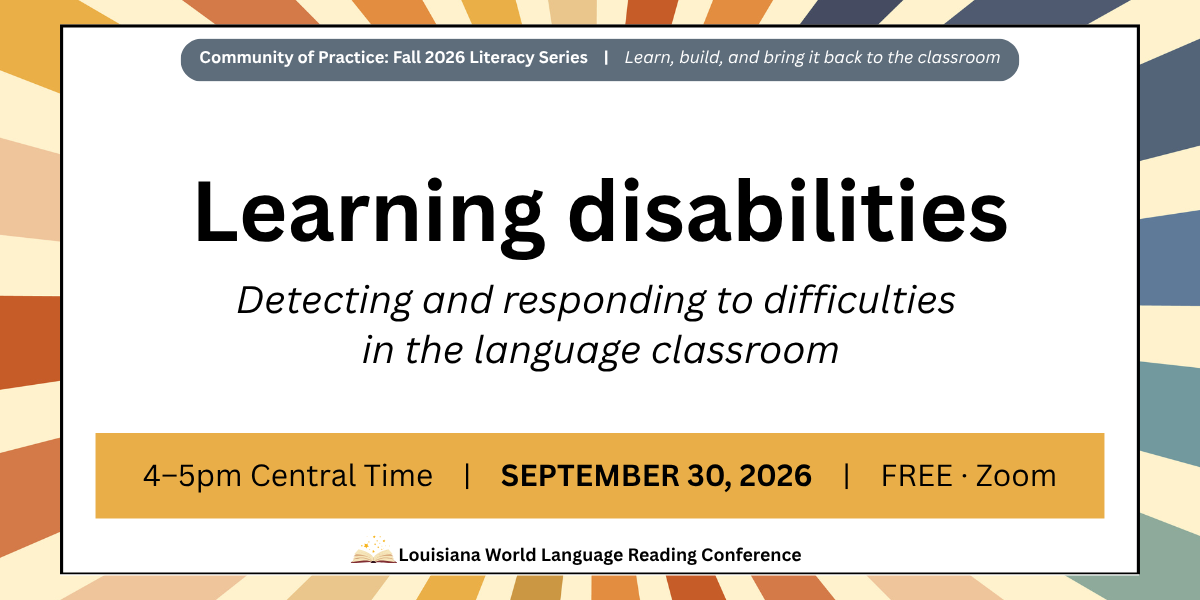
Learning Disabilities
September 30, 2026 | 4-5 Central Time | Zoom
Description:
When a student struggles in a language class, how can we begin thinking about why? This session examines the sometimes-overlapping signs of typical second-language development, reading difficulty, and learning disability. Participants will work through classroom examples and discuss what teachers can observe, document, scaffold, and communicate when students experience persistent difficulties.Objectives: Participants will be able to…
examine how language-learning difficulties can overlap with signs associated with learning disabilities
analyze student scenarios using multiple possible explanations
identify appropriate instructional responses and next steps within the teacher's role.
-
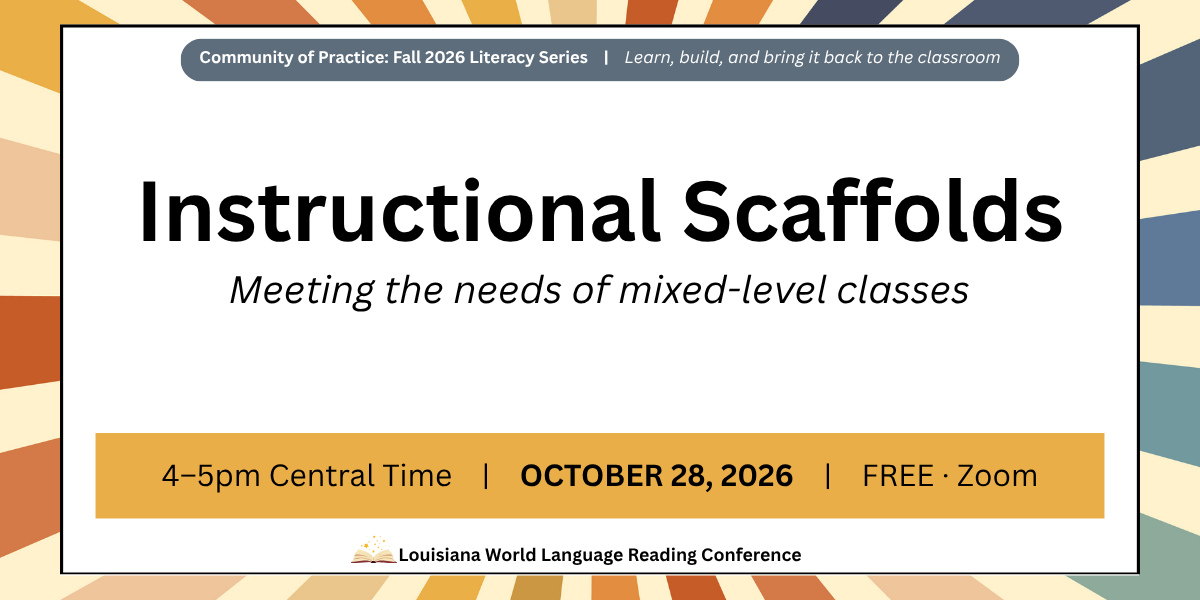
Instructional Scaffolds
October 28, 2026 | 4-5 Central Time | Zoom
Description:
One classroom can contain students with very different levels of language proficiency, reading skill, background knowledge, and confidence. How can teachers provide meaningful support without simply creating a different lesson for every student? This session explores practical scaffolds that can make reading tasks more accessible while preserving their core communicative and literacy goals. Participants will bring, select, or receive a reading task and work collaboratively to develop scaffolds for different learner needs.Objectives: Participants will be able to…
identify barriers that can make L2 reading tasks difficult for different learners
select scaffolds that respond to specific learner needs
adapt a reading activity for students with varying levels of support.
-
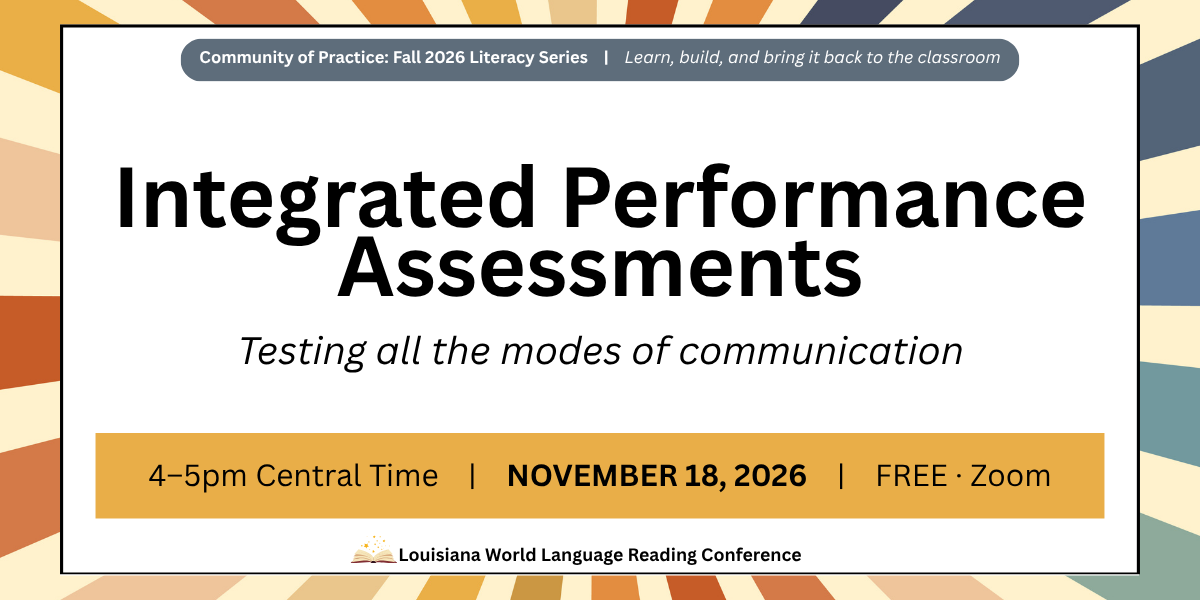
Integrated Performance Assessments
November 18, 2026 | 4-5 Central Time | Zoom
Description:
Integrated Performance Assessments can do more than measure what students know at the end of a unit: thoughtfully designed IPAs can reveal how students interpret texts and use what they understand to communicate. This session explores the role of literacy within the interpretive, interpersonal, and presentational components of an IPA. Participants will examine examples and then develop or revise an IPA for their own classroom.Objectives: Participants will be able to…
examine connections among the three modes of communication within an IPA
evaluate the role of reading and interpretation within an assessment sequence
create or revise an IPA aligned with their students' proficiency level and instructional goals.
-
Formative Assessments
December 16, 2026 | 4-5 Central Time | Zoom
Description:
How do we know what students are understanding before the unit test? This session explores quick, low-stakes formative assessment strategies that can help teachers monitor both student learning and participation during literacy instruction. We'll consider how techniques including games, exit tickets, comprehension checks, and other brief activities can generate useful information—not simply keep students busy. Participants will develop or adapt formative checks they can incorporate into upcoming lessons.Objectives: Participants will be able to…
distinguish between activities that generate evidence of learning and those that primarily generate participation
examine strategies for gathering quick evidence of student understanding
create or adapt a formative assessment for an upcoming lesson.